lâm sàng nghiên cứu | Bilateral chuyển động Training and phục hồi of chi trên After đột quỵ - đột quỵ Center
nghiên cứu background
chi trên dysfunction is a common disability after đột quỵ. About 30%-66% of đột quỵ bệnh nhân are still unable to use their upper limbs after 6 months of đột quỵ, which seriously affects các hoạt động sinh hoạt hàng ngày(ADL). Bilateral chuyển động training is a new điều trị emerging in recent years. Many studies have shown that bilateral chuyển động training has significant advantages in improving thần kinh defects and promoting brain function recombination, compared with unilateral chuyển động training. This nghiên cứu investigated the effect and mechanism of bilateral chuyển động training on chi trên dysfunction in bệnh nhân with hemiplegia.
Subjects and methods
52 bệnh nhân with hemiplegia were randomly divided into điều trị group (n=26) and kiểm soát group (n=26). The điều trị group was treated with bilateral exercise liệu pháp, and the kiểm soát group was trained with traditional neurodevelopmental method on the affected chi trên. The điều trị lasted for 6 weeks. Fugl-Meyer rated chi trên (FMA-UE) and Modified Barthel Index (MBI) were used to evaluate before and after điều trị.
kết quả
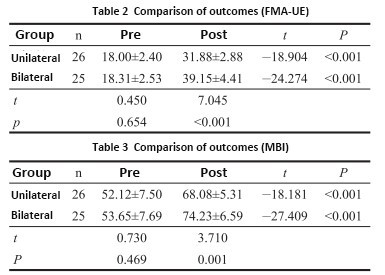
One bệnh nhân in the điều trị group failed to complete all tests. Most bệnh nhân in the điều trị group felt sore and fatigue in the first few days of training, which gradually disappeared after continuous training without affecting the training. There were no significant differences in FMA-UE and MBI scores between the two groups before điều trị (P > 0.05). After điều trị, FMA-UE and MBI scores in both groups were significantly higher than before điều trị(P<0.001); the score of the điều trị group was significantly higher than that of the kiểm soát group (P < 0.01) (Table2&3).
Conclusions
Bilateral chuyển động training can significantly cải thiện the chi trên chức năng vận động and daily living ability of hemiplegia bệnh nhân during phục hồi chức năng.
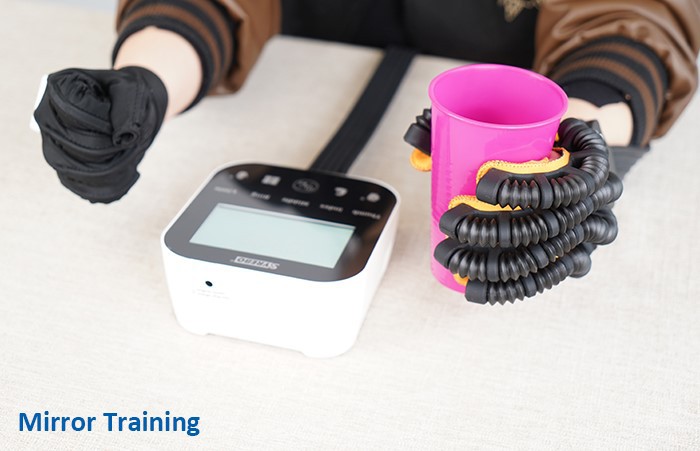
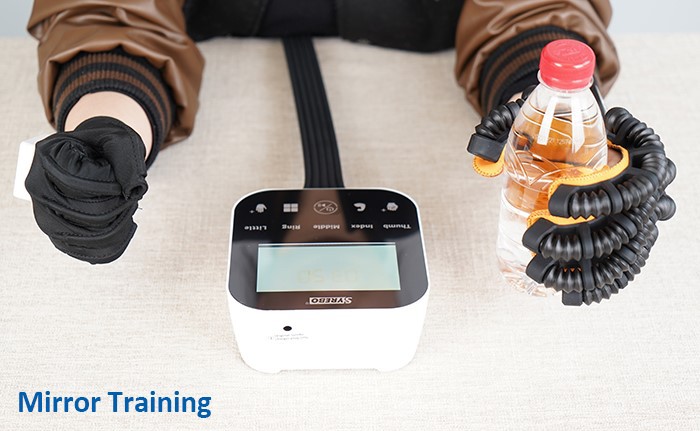
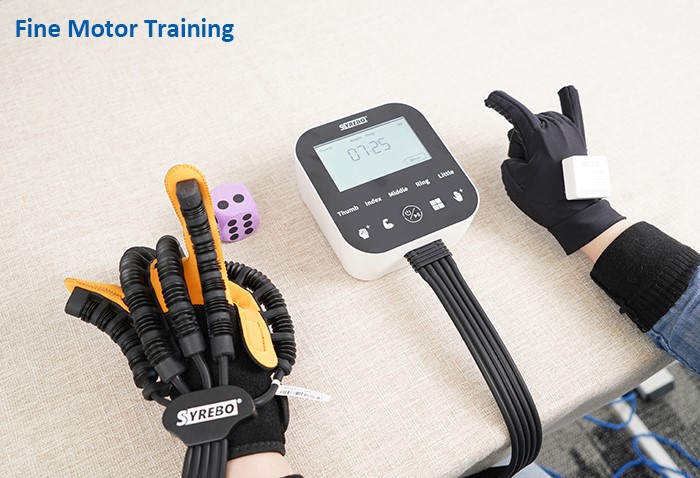
To help bệnh nhân relearn and phục hồi bàn tay vận động functions, Syrebo sáng tạo găng tay phục hồi chức năng bàn tay allows đột quỵ bệnh nhân to do bilateral chuyển động training. With the help of Syrebo găng tay phục hồi chức năng bàn tay, the healthy bàn tay with dữ liệu găng tay can drive the affected bàn tay with the power găng tay to move synchronously. Therefore, bệnh nhân can pick up the cup or bottle with affected bàn tay, which can thúc đẩy the autonomic phục hồi of the brain and speed up the phục hồi chức năng process of bàn tay function. In addition, Syrebo high-end models (C12 and bàn tay phục hồi chức năng system for lâm sàng) have fine vận động training that power găng tay can drive each affected ngón tay to perform the flexion and extension, making training more hiệu quả and thorough.